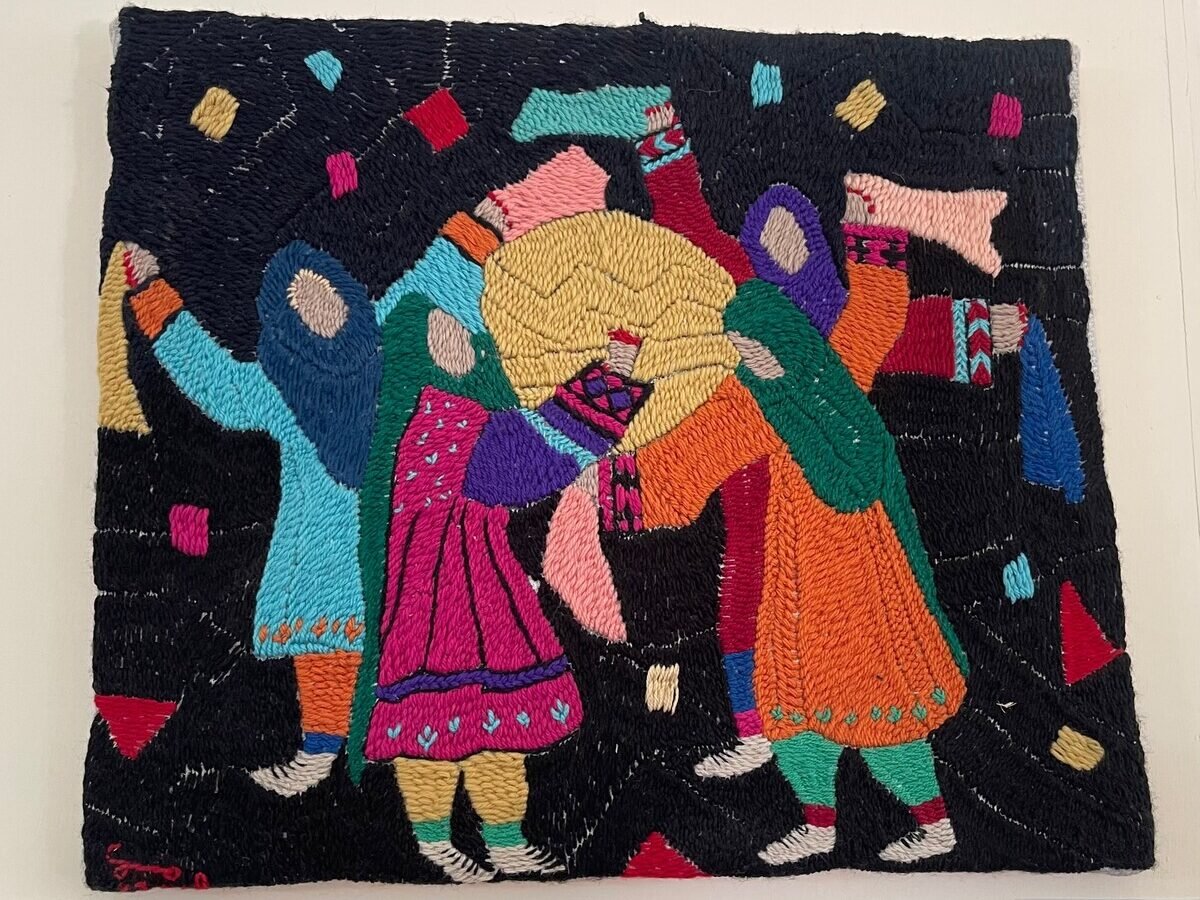
QUETTA, Pakistan: A 60-year-old woman from Quetta is gaining recognition for her artistic talent after spending decades creating detailed artworks using nothing more than needles, thread and colourful wool.
Known as Morqai, she spent most of her life managing household responsibilities while quietly developing her creative skills. Although she began working with needles and thread during childhood, her artwork remained largely unseen outside her family for many years.
Her son, Muhammad Asif Kasi, a visual artist himself, recently organised an exhibition at the Pashto Academy in Quetta to introduce his mother’s work to a wider audience.
The exhibition featured around 20 pieces created by Morqai. Unlike conventional embroidery, her work uses coloured wool to produce detailed scenes that resemble paintings when viewed from a distance.
Her creations draw inspiration from rural life, Pashtun and Baloch traditions, nomadic communities, women and the natural environment. Some pieces also reflect the changes she has witnessed in Quetta’s climate over the years, including the decline of gardens and increasing dryness.
An Artist Who Learned Without Formal Training
Morqai never attended an art school or received formal artistic training. She initially learned basic embroidery but gradually developed her own methods of designing scenes and expressing ideas through thread.
She would often sit down with her needle and thread after completing household chores, turning her spare time into an opportunity to create something artistic.
Her son says he has watched her work since childhood and considers himself one of her students. He began preserving her creations in 2016 after realising that many of her artworks had been gifted to relatives and were scattered across different homes.
Over time, he managed to collect and preserve approximately 20 pieces.
Art Inspired by Culture and Changing Nature
Morqai’s work reflects the lives and traditions she has observed throughout her life. Rural landscapes, nomadic families and cultural practices appear repeatedly in her creations.
Her son believes that her artwork represents personal memories and emotions expressed through a medium traditionally associated with household decoration.
The exhibition was organised around Pashtun Culture Day and remained open for approximately a week. Visitors were particularly interested in seeing how wool and thread could be used to create pieces that combine embroidery with visual art.
According to her son, some visitors and art enthusiasts praised the patience, detail and effort involved in producing the work.
A Son’s Effort to Preserve His Mother’s Talent
Asif says his decision to organise the exhibition was driven by a desire to ensure that his mother’s artistic work would not disappear or remain hidden inside family homes.
He also hopes that her story will encourage other women whose creative abilities have never received public recognition.
Morqai reportedly felt overwhelmed when her son first told her about the exhibition. Seeing her work displayed publicly and appreciated by visitors was an emotional experience after decades of creating art in private.
Her journey highlights how artistic talent can develop outside formal institutions and how family support can help bring overlooked creative work into public view.