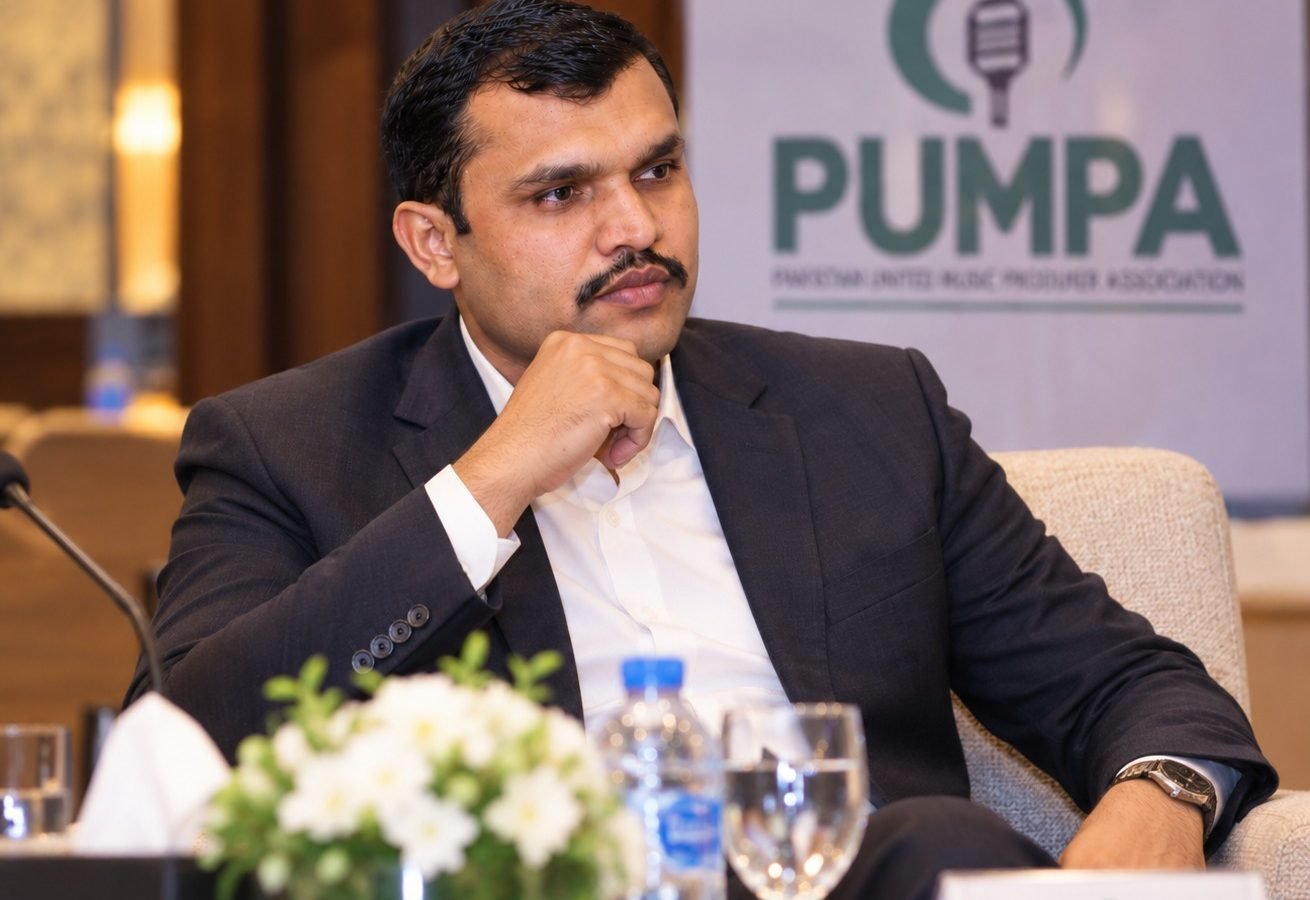
Behind every video or song posted online sits a quiet chain of questions: who made it, who owns it, and who gets paid. Most viewers never think about that chain. Khair Muhammad Kumbher, a content creator and TikTok personality, has spent years standing on both sides of it. He is also Vice Chairman of the trade body PUMPA, CEO of the distribution company Sindh Distro, and Head of Operations of the Anti Music Fraud Task Force (AMFTF).
A Creator Before a Founder
His story starts in Khipro, a small town in Sindh’s Sanghar district, where in 2008 he taught himself editing, mixing, and mastering on a second-hand computer. There was no studio in town and no teacher to learn from. I had no teacher and no equipment worth the name, but I had permission, and permission is everything when you are fifteen, he says.
That early habit of making things and putting them out into the world shaped everything that followed.
Learning the Platforms by Using Them
During the COVID-19 pandemic, Khair Muhammad moved online full time. He freelanced in audio editing and voice-over work and released his own instrumental music, including the 2021 album 8th Night. Being on the platforms as a creator taught him how digital distribution, metadata, and payments actually function, lessons no manual had offered him in Khipro.
Two Sides of the Same Screen
Today, Khair Muhammad is as active in front of the camera as he is in the boardroom. He shares his content on TikTok through the account @khairmkumbher, on Instagram through the account @khairmkumbher, and on YouTube through the channel @KhairMuhammadKumbher. The online work sits alongside his business activities rather than apart from them.
Being a creator himself means he understands what independent artists face when they publish online: questions of credit, ownership, and who gets paid. “I learned more from uploading my own album than from any article I read, ” he says.
The Structure Behind the Content
That understanding led to Sindh Distro, which he co-founded with Sher Muhammad (Sher Kumbher) in 2023 to carry music from Sindh and beyond onto global streaming platforms. Every release is checked for contributor shares, ownership, and credits. If that information is wrong at the start, the royalties will be wrong at the end, he says. His production house, KS Production, supports artists with recording, mixing, and mastering.
A Voice for Independent Music
In 2026, PUMPA was incorporated as the first federally licensed trade body for independent music, giving labels, producers, and rights holders a collective voice. In February of that year, the Worldwide Independent Network (WIN) admitted it as a member alongside Ukraine’s SPILNA. WIN’s chief executive, Noemí Planas, said the additions extended the representation of independent voices into new territories.
When Posting Becomes a Risk
For anyone who publishes online, fraud is a real risk. AI voice cloning, fake tracks, streaming farms, and re-uploaded catalogues can drain income from genuine artists. Through the AMFTF (Founded by Khair Muhammad and Sher Muhammad), Khair Muhammad helps review releases and report suspicious cases to platforms. According to the organisation, its detection tool is now used by rights holders in several countries. A tool does not replace judgement, he says. It tells us where to look.
Tokyo, Toronto and the Message to Young Creators
In November 2026, he is due to represent PUMPA at the IMCJ Asia-Pacific summit in Tokyo and at WIN’s WINCON conference in Toronto. His message to young creators is simple: where you start matters less than the work you keep doing. “I sat down in 2008 and I have not really got up since,” he says.